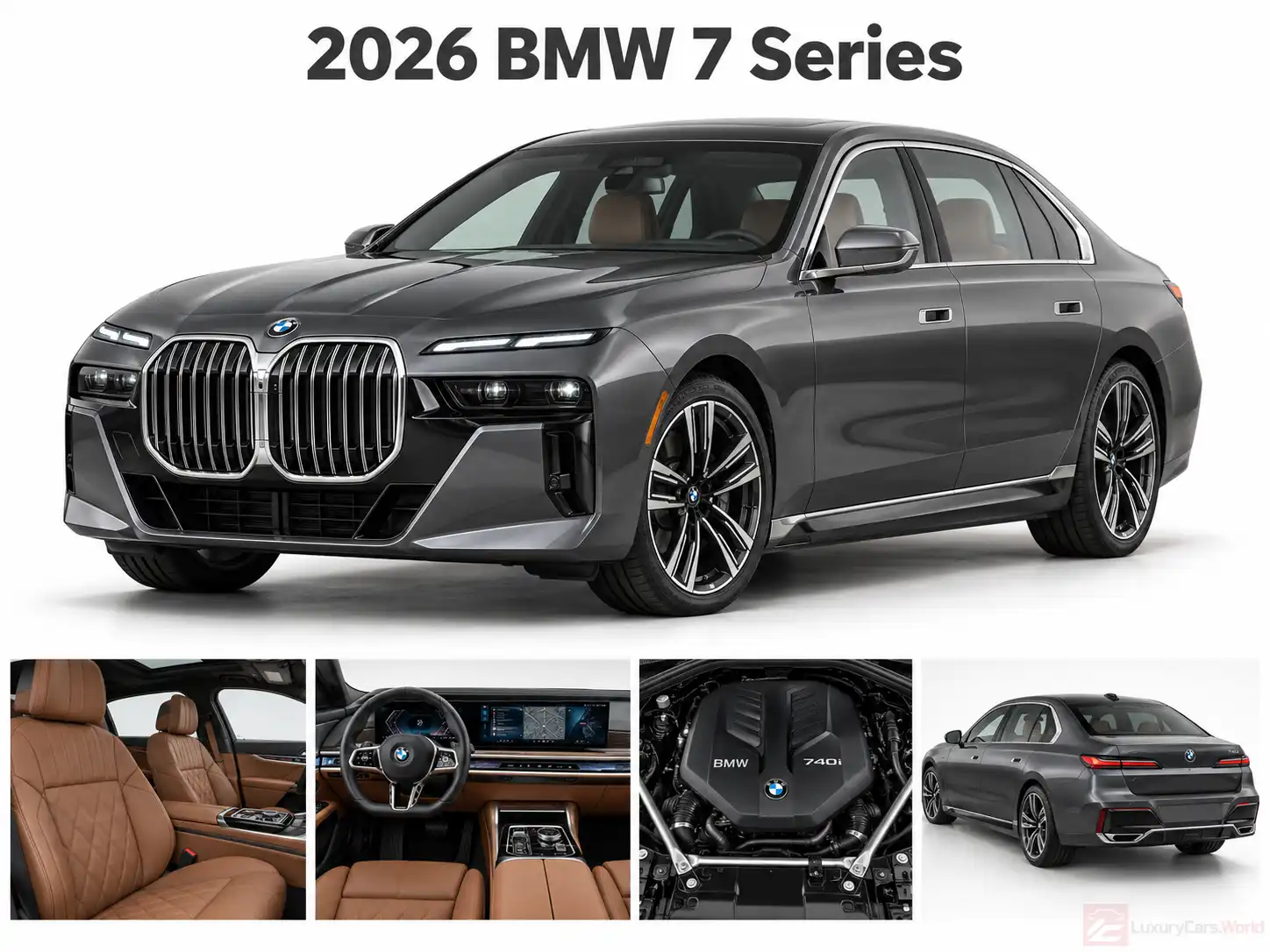
The 2026 BMW 7 Series deserves consideration if you want generous passenger accommodation, a quiet cabin and substantial performance in a sedan rather than an SUV.
Its broad powertrain range is a strength, but the abundance of options can complicate the purchase. Rear-seat comfort upgrades, driver assistance and the large entertainment screen should be selected deliberately.
Its limitations include considerable exterior size, extensive screen-based controls and the financial uncertainty associated with an expensive, complex luxury car.
Our value recommendation is the 740i or 740i xDrive. Choose the 750e when regular charging is realistic, and compare the i7 when you want fully electric ownership. The V8 and M70 versions are primarily purchases for buyers who specifically value their additional performance.
2026 BMW 7 Series Specifications
| Item | Verified 2026 U.S. information |
|---|---|
| Vehicle category | Full-size luxury sedan |
| Generation | Seventh generation; G70 model family |
| Seating | Five in published standard specifications |
| Gasoline models | 740i, 740i xDrive, 760i xDrive |
| Plug-in hybrid | 750e xDrive |
| Electric models | i7 eDrive50, i7 xDrive60, i7 M70 |
| Gasoline/PHEV transmission | Eight-speed automatic |
| Electric transmission | Single-speed reduction drive |
| Drivetrain | Rear-wheel drive or AWD, depending on model |
| Gasoline/PHEV output | 375–536 hp |
| Electric output | 449–650 hp |
| 750e electric range | 35 miles, EPA-rated |
| i7 electric range | 267–314 miles across EPA-listed configurations |
| Published gasoline-model starting price | $100,850 including destination |
| Primary market | United States |
BMW’s technical information and year-specific equipment listings establish the configurations. EPA range varies by version and wheel size; the highest figure does not apply to every i7.
What Changed for 2026?
The 2026 7 Series is principally a continuation of the existing G70 generation. Year-specific buying guides identify no major redesign for this model year.
That does not mean every package, software feature or price remains identical throughout production. Equipment should still be confirmed on the individual vehicle’s window sticker.
The 2027 Refresh Is a Separate Car
BMW announced the updated 2027 7 Series on April 22, 2026. Its revised cabin introduces Panoramic iDrive and a passenger screen, while the electric models receive different battery technology. Those changes should not be attributed to a U.S. 2026 vehicle.
This distinction also affects model names. The 2026 gasoline six-cylinder cars are identified as 740i and 740i xDrive, while newer material uses different naming.
Buyers comparing remaining 2026 inventory with 2027 cars should evaluate the actual equipment and price difference rather than assuming the later calendar announcement describes both.
2026 BMW 7 Series Price and Model Lineup
The following published 2026 U.S. reference prices were checked on October 9, 2026.
Gasoline and Plug-In Hybrid Models
| Model | Published MSRP including destination | Main buying reason |
|---|---|---|
| 740i | $100,850 | Lowest entry price; rear-wheel drive |
| 740i xDrive | $103,850 | Six-cylinder performance with AWD |
| 750e xDrive | $111,550 | Plug-in capability and AWD |
| 760i xDrive | $126,250 | V8 performance |
These totals are corroborated by year-specific pricing coverage. An authorized BMW dealer lists the corresponding base prices before destination as $99,300, $102,300, $110,000 and $124,700. The difference is $1,550.
Fully Electric i7 Models
| Model | Published base MSRP before destination | Main buying reason |
|---|---|---|
| i7 eDrive50 | $105,700 | Lowest-priced electric version |
| i7 xDrive60 | $124,200 | Dual-motor AWD |
| i7 M70 | $168,500 | Highest electric performance |
An authorized BMW dealer’s 2026 showroom corroborates these base figures. Destination-inclusive totals vary among published references, so obtain the actual window sticker before quoting a final delivered MSRP.
A factory-issued nationwide 2026 price schedule was not accessible during this research. These are documented reference MSRPs, not guaranteed transaction prices. Options, taxes, registration and dealer charges are additional.
Which Model Offers the Best Value?
The 740i is the strongest starting point when AWD is unnecessary. Its six-cylinder engine provides ample performance while preserving the lowest purchase price.
Choose the 740i xDrive if AWD matches your driving conditions. Appropriate tires still matter; AWD does not remove the need for suitable winter equipment.
The 750e xDrive becomes persuasive when you can charge regularly and many journeys fit within its electric capability. Without charging, its ownership advantages become less clear.
Select the 760i because you want a V8, rather than assuming it is necessary for a convincing luxury experience.
2026 BMW 7 Series Exterior Design and Dimensions
The 2026 7 Series has a commanding appearance, with a large grille, split front lighting and a substantial passenger compartment.
Its styling will divide opinion. View the exact paint and wheel combination in person, because photographs can change the apparent balance of its proportions.
| Measurement | Published 2026 dimension |
|---|---|
| Length | 212.2 inches |
| Width without mirrors | 76.8 inches |
| Width including mirrors | 86.3 inches |
| Height | 60.8 inches |
| Wheelbase | 126.6 inches |
BMW’s retained 2026 technical entries identify these dimensions.
The practical consequences are straightforward: measure the garage, door-opening space and parking entrances before ordering.
Available rear-axle steering can help maneuverability, but inclusion varies by specification. It cannot make a wide sedan fit comfortably into every parking bay.
2026 BMW 7 Series Interior, Seating and Comfort
Passenger accommodation is one of the strongest reasons to buy the 7 Series.
The published 2026 equipment list includes adaptive air suspension, four-zone climate control, heated front and rear seats, soft-close doors and a panoramic glass roof.
However, the most elaborate rear-seat features are optional.
| Feature or package | Published equipment status |
|---|---|
| Heated front and rear seats | Standard |
| Four-zone climate control | Standard |
| Luxury Rear Seating Package | Optional |
| Rear Executive Lounge Seating | Optional |
| Front ventilation and massage | Specification-dependent options |
| BMW Theater Screen | Optional |
Package availability and combinations should be checked against the chosen model.
Choose Equipment Around Actual Passengers
An owner who usually drives alone may receive little benefit from elaborate rear-seat equipment.
A chauffeur-driven buyer should spend considerable time testing the rear compartment, including the seating position, support and controls.
Families should bring their intended child seats to the dealership. Check installation, buckle access and remaining front-seat space.
Optional lounge arrangements deserve particular scrutiny if a household regularly needs the middle rear seating position. Confirm the usable seating layout of the actual build.
Cargo Space and Everyday Practicality
Cargo capacity depends on powertrain and measurement convention.
BMW lists 19.1 cubic feet for the 740i xDrive, while the year-specific 750e specification lists 18.5 cubic feet.
The EPA guide publishes different rounded cargo figures using its regulatory classification data. They should not be compared directly with manufacturer-listed volumes as though the methods were identical.
For buying purposes, try your luggage. A trunk’s opening and internal shape can matter more than a small difference between published figures.
Airport travel, golf equipment and strollers are useful real-world tests. Do not assume a large sedan offers the loading flexibility of a hatchback or SUV.
2026 BMW 7 Series Engines, Plug-In Hybrid and Electric Powertrains
| Version | Powertrain | Output | Drivetrain |
|---|---|---|---|
| 740i | 3.0-liter turbo inline-six, mild hybrid | 375 hp; 398 lb-ft | RWD |
| 740i xDrive | Same six-cylinder configuration | 375 hp; 398 lb-ft | AWD |
| 750e xDrive | Turbo inline-six plus electric motor | 483 hp; 516 lb-ft combined | AWD |
| 760i xDrive | 4.4-liter twin-turbo V8, mild hybrid | 536 hp; 553 lb-ft | AWD |
| i7 eDrive50 | Electric | 449 hp | RWD |
| i7 xDrive60 | Dual-motor electric | 536 hp | AWD |
| i7 M70 | Performance dual-motor electric | 650 hp | AWD |
These are 2026 configurations, not figures from the updated 2027 lineup.
The mild-hybrid gasoline cars do not plug in. The 750e does, while the i7 relies entirely on electricity.
For the PHEV, use verified combined system output rather than adding separately quoted engine and motor peaks.
Performance and Driving Behavior
BMW quotes 4.6 seconds to 60 mph for the 750e, 4.1 seconds for the 760i and 3.5 seconds for the i7 M70. These are manufacturer figures, not independent measurements of cars tested for this article.
Car and Driver’s 2026 guide praises the gasoline/PHEV family’s smooth power delivery and cabin insulation, while criticizing steering feedback and potentially overwhelming technology. Its i7 guide similarly emphasizes refined electric acceleration and ride comfort.
Those observations suggest useful test-drive priorities: ride quality on rough pavement, low-speed control, screen usability and confidence when parking.
A more powerful model is not automatically more comfortable. Wheels, tires and optional chassis equipment can influence the experience.
Fuel Economy, Electric Range and Charging
Gasoline and PHEV Economy
| Model | EPA city/highway/combined |
|---|---|
| 740i | 25/31/28 mpg |
| 740i xDrive | 24/31/27 mpg |
| 760i xDrive | 18/25/20 mpg |
| 750e xDrive, gasoline operation | 23/26/24 mpg |
The 750e additionally has 35 miles of EPA electric range and a 70-MPGe charge-depleting rating. MPGe measures energy equivalence; it is not gasoline mpg.
The PHEV makes the most sense when regular charging allows a meaningful share of daily travel to use electricity.
i7 Range Depends on Wheels
| Model | Wheel size | EPA range |
|---|---|---|
| i7 eDrive50 | 19 inches | 314 miles |
| i7 eDrive50 | 20 inches | 301 miles |
| i7 eDrive50 | 21 inches | 307 miles |
| i7 xDrive60 | 19 inches | 311 miles |
| i7 xDrive60 | 20 inches | 296 miles |
| i7 xDrive60 | 21 inches | 308 miles |
| i7 M70 | 20 inches | 267 miles |
| i7 M70 | 21 inches | 285 miles |
These exact configurations appear in the 2026 EPA/DOE guide. The pattern shows why buyers should check the rated wheel-and-tire configuration rather than assume larger wheels always change range in the same way.
Temperature, speed, heating demand and charging habits affect real-world results. Plan long journeys with a reserve rather than treating the full rated range as a guaranteed distance between stops.
Charging
BMW’s 2026 i7 entries specify up to 195-kW DC charging and a 34-minute 10–80% charging claim. Peak power is not sustained throughout the session; battery temperature, starting charge and charger capability affect the result.
For the 750e, the EPA guide lists approximately two hours at 240 volts. That assumes suitable equipment and conditions, not an ordinary household outlet.
Before choosing an electrified version, establish home-charging access and check the public networks along your regular routes.
Technology and Infotainment
The 2026 cabin combines a 12.3-inch instrument display with a 14.9-inch central touchscreen. Wireless Apple CarPlay and Android Auto are listed as standard.
The optional rear Theater Screen is a distinctive feature, but should be selected around actual use.
BMW explains that Theater Mode lowers the screen, closes the rear blinds and adjusts the cabin environment.
Try it from both the rear seats and driving position. Ask how streaming connectivity works and which services require separate accounts or payment.
The published equipment list also distinguishes standard Bowers & Wilkins audio from the optional Diamond Surround Sound System. Do not assume the premium upgrade is included because the brand name appears in an advertisement.
Safety and Driver Assistance
Year-specific specifications identify collision-warning systems, automatic braking, parking sensors and driver-attention monitoring. More advanced functions depend on equipment and packages.
BMW’s U.S. Highway Assistant can permit hands-free operation at up to 85 mph on suitable controlled-access highways, while requiring the driver to remain attentive and ready to intervene. It is driver assistance, not autonomous driving.
Confirm its inclusion on the actual vehicle. Published equipment summaries can disagree about standard versus package-dependent functions.
An applicable exact-year NHTSA star rating or IIHS award was not established during this research. This guide therefore makes no such rating claim.
Reliability, Recalls and Warranty
Reliability
There is insufficient long-term evidence to declare the 2026 7 Series inexpensive or trouble-free to own.
Reliability also cannot be reduced to one family-wide verdict: a six-cylinder mild hybrid, PHEV and electric i7 have different mechanical systems.
For a demonstrator or used example, obtain service records, software history and a specialist inspection.
Recalls
As of October 9, 2026, a definitive official recall count covering every 2026 7 Series and i7 version was not established. This is not a claim of zero recalls.
Check the individual VIN through BMW’s official recall lookup and NHTSA. Recall announcements involving earlier model years should not be transferred automatically to a 2026 car.
BMW confirms that open recalls can be repaired free of charge at a BMW center.
Warranty and Maintenance
BMW lists a four-year/50,000-mile new-vehicle warranty and three-year/36,000-mile Ultimate Care scheduled maintenance, whichever limit occurs first.
Standard Ultimate Care should not be confused with broader paid maintenance plans. Its published terms specify covered scheduled items rather than blanket coverage of all wear components.
For 2026 BMW battery-electric vehicles, BMW additionally documents eight-year/100,000-mile battery defect coverage and separate protection for cell-module capacity falling below 70% state of health, subject to its terms. Do not transfer that BEV provision automatically to the 750e.
Ownership and Running Costs
Compare energy costs using your actual travel pattern.
For an illustrative 740i calculation, assume 10,000 annual miles, 28 mpg and premium gasoline at $4.50 per gallon:
10,000 ÷ 28 × $4.50 ≈ $1,607 annually.
For an illustrative i7 calculation, assume 10,000 miles, electricity consumption of 0.40 kWh per mile and electricity at $0.20 per kWh:
10,000 × 0.40 × $0.20 = $800 annually.
These examples are not ownership forecasts. Public charging, local prices and driving conditions can change the comparison.
Insurance, tires, servicing and depreciation may outweigh energy savings. Obtain quotations for the actual specification, and avoid assuming expensive options will recover their purchase cost at resale.
2026 BMW 7 Series Pros and Cons
Pros
- Broad choice of gasoline, PHEV and electric powertrains.
- Spacious passenger compartment.
- Extensive standard comfort equipment.
- Useful electric capability in the 750e.
- Strong performance without requiring the highest-priced model.
Cons
- Large dimensions complicate parking.
- Screen-based controls require familiarization.
- Desirable options can substantially raise the price.
- Electric range varies meaningfully by configuration.
- Long-term repair costs and depreciation remain uncertain.
Competitor Comparison
For the 740i xDrive, three relevant U.S. alternatives are:
| Alternative | Comparable configuration | Key distinction |
|---|---|---|
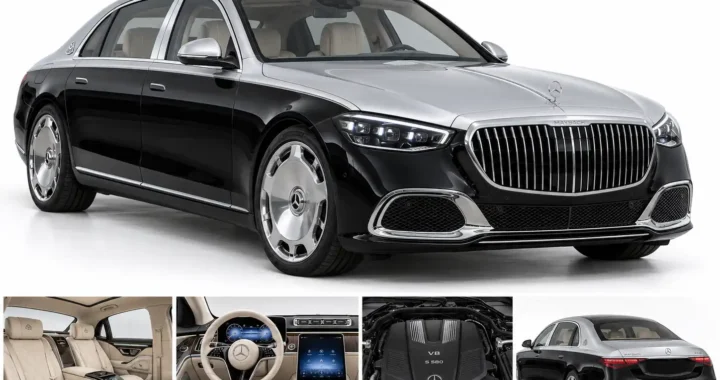
| 2026 Mercedes-Benz S 500 4MATIC | Six-cylinder gasoline luxury sedan; AWD | A direct flagship-sedan comparison |
| 2026 Audi A8 L quattro | 335-hp V6; AWD | More restrained presentation |
| 2026 Genesis G90 3.5T AWD | 375-hp twin-turbo V6; AWD | Strong equipment-and-price comparison |
Mercedes identifies the 2026 S 500 at 442 hp. Year-specific Audi data confirms 335 hp, while Genesis lists 375 hp for the base G90.
Compare the S-Class by testing both cars’ controls and rear comfort. The Audi deserves consideration if the BMW’s styling and screen-heavy cabin are unappealing.
The G90 is worth pricing against an equivalently equipped BMW, especially when passenger comfort matters more than the broadest powertrain choice.
These are gasoline comparisons. An i7 buyer should also evaluate electric competitors and charging performance rather than treat the same shortlist as sufficient.
Who Should Buy the 2026 BMW 7 Series?
Choose a six-cylinder model if you want flagship comfort without changing your fueling routine.
Consider the 750e if you can charge consistently and still need convenient long-distance gasoline travel.
Choose the i7 if home charging is available and its range fits your routes. Consider the V8 or M70 when their performance is a specific priority.
Look elsewhere if you rarely use the rear seats, need SUV-like cargo flexibility or regularly park in confined spaces.
Frequently Asked Questions About 2026 BMW 7 Series
How much does the 2026 BMW 7 Series cost?
Published reference pricing starts at $100,850 including destination for the 740i, before options and other charges.
Is every 7 Series electric?
No. The range includes gasoline mild hybrids, the 750e PHEV and electric i7 models.
Which version offers the best value?
The 740i is the clearest starting point; choose xDrive when AWD suits your needs.
How far can the 750e travel electrically?
The 2026 EPA guide lists 35 miles.
What is the i7’s maximum EPA range?
The listed eDrive50 with 19-inch wheels reaches 314 miles.
Is the Theater Screen standard?
It is listed as optional equipment.
Do all versions have AWD?
No. The 740i and i7 eDrive50 use rear-wheel drive.
Is Highway Assistant autonomous?
No. The driver must remain attentive and ready to take control.
Does scheduled maintenance include every repair?
No. Ultimate Care covers specified scheduled maintenance, not every repair or wear item.
Is the 2026 car the updated 2027 model?
No. The 2027 refresh has different technology and specifications.
2026 BMW 7 Series
The 2026 BMW 7 Series succeeds as a flexible luxury-sedan family, with different powertrains serving genuinely different ownership needs.
The six-cylinder models offer the most straightforward purchase. The 750e rewards regular charging, while the i7 requires a deliberate move to electric travel.
Choose around your routes, passengers and charging access first. Then confirm options, pricing and VIN-specific recall status. That approach produces a more useful car than selecting the highest badge alone.
Sources
- BMW U.S. technical data — Includes retained 2026 entries alongside newer models.
- 2026 BMW 7 Series equipment comparison — Configurations and equipment.
- 2026 BMW 750e specifications — PHEV details.
- 2026 pricing coverage — Destination-inclusive reference prices.
- Authorized BMW dealer’s 2026 lineup — Base pricing.
- Authorized dealer’s 2026 i7 showroom — Electric-model pricing.
- 2026 EPA/DOE Fuel Economy Guide — Dealer-hosted official guide.
- BMW maintenance and warranty — Coverage overview.
- BMW maintenance terms — Included scheduled services.
- BMW electric ownership information — 2026 BEV battery coverage.
- BMW driver assistance — Highway Assistant conditions.
- BMW recall lookup — VIN-specific checks.
- Car and Driver 7 Series guide — Attributed editorial assessment.
- BMW’s 2027 announcement — Used to separate the later refresh.
- Genesis G90, 2026 Audi A8 specifications and Mercedes’ 2026 model information — Competitor references.